
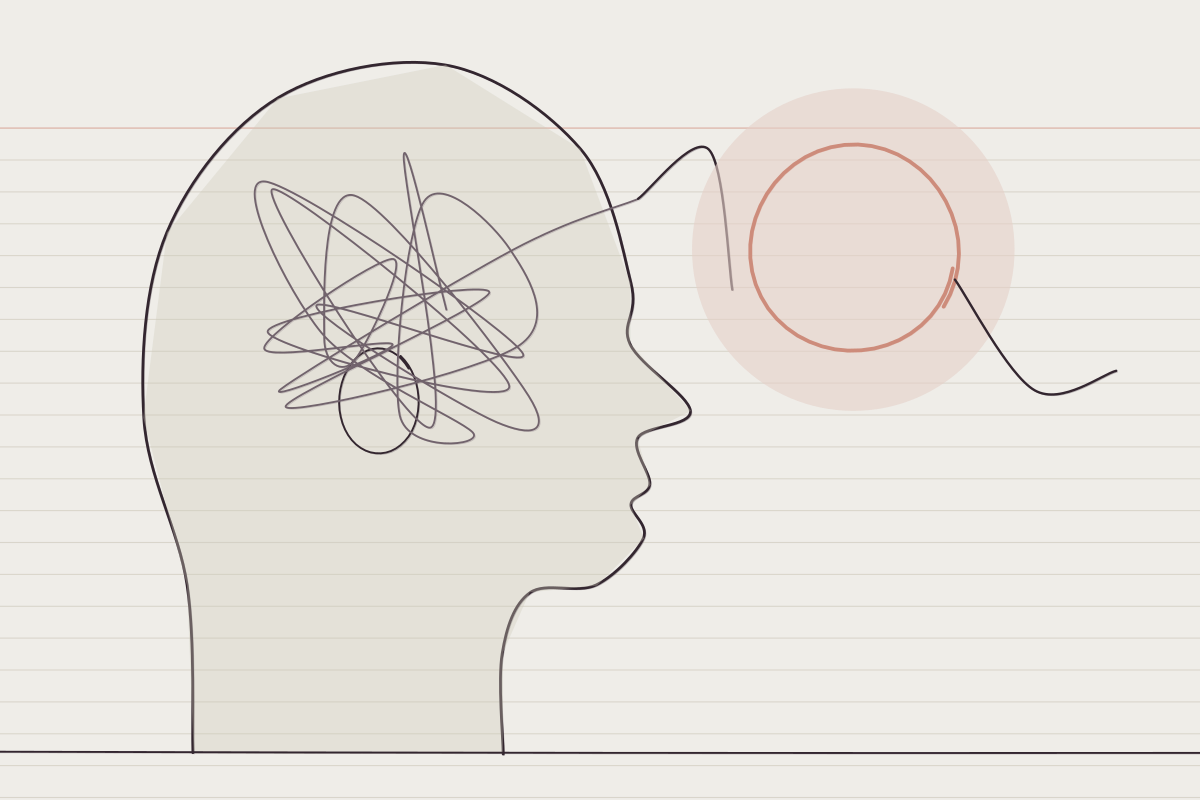
Mental health challenges can touch nearly every part of a person’s life, including their marriage. When someone is dealing with anxiety, depression, chronic stress, trauma, or another emotional struggle, it can affect how they communicate, how much energy they have, how they respond to conflict, and how connected they feel to their spouse. Over time, those changes can create tension or distance, even when both people still care deeply about each other.
That does not mean the marriage is destined to fail. Understanding what is happening can make it easier for both spouses to respond with more patience, clarity, and compassion. It can also help couples recognize which problems belong to the marriage itself and which may be connected to a broader mental health concern.
The Connection Between Mental Health and Marriage
Marriage is built through everyday interactions, how you speak to each other in the morning, handle stress after a long day, ask for support, and respond when things go wrong. These small moments shape the emotional tone of the relationship.
When one spouse is struggling mentally or emotionally, these interactions often begin to shift. The change is usually gradual rather than sudden, which can make it harder to notice. A normally talkative partner may become quiet, a patient spouse may become more irritable, and someone who once enjoyed shared activities may start to withdraw.
For the other spouse, this can feel confusing. They may wonder:
- Why are they pulling away from me?
- Did I do something wrong?
- Do they still love me?
These reactions are natural. But what can feel like rejection is often someone struggling internally. Recognizing this difference can help prevent unnecessary pain and misunderstanding.
Common Mental Health Challenges That Can Affect a Marriage
Mental health challenges can show up differently from one person to another, but several common struggles can have a noticeable impact on marriage. In many cases, these challenges influence communication, energy levels, decision-making, and emotional availability within the relationship.
Anxiety
A person dealing with anxiety may experience excessive worry, fear, tension, irritability, or difficulty relaxing. In a marriage, this may look like repeatedly seeking reassurance, worrying about finances or family matters, avoiding certain situations, or becoming overwhelmed during disagreements.
Over time, anxiety can create a dynamic where one spouse feels they are constantly trying to calm things down, while the other never feels fully reassured. This can lead to frustration on both sides, even when love and care are still present.
Depression
Depression can affect energy, motivation, interest, sleep, concentration, and emotional connection. A spouse who is depressed may seem distant or uninterested in activities the couple once enjoyed together. They may also have less energy for household responsibilities, affection, socializing, or intimacy.
The other spouse may interpret these changes as rejection or loss of love, which can create emotional pain on both sides. Without understanding what is happening, both partners may feel misunderstood and disconnected.
Chronic Stress
Not every emotional difficulty is a mental health disorder. Sometimes long-term stress alone can place significant pressure on a marriage. Common sources include:
- Work pressure or job instability
- Financial strain
- Parenting challenges
- Health concerns
- Family conflict or caregiving responsibilities
When stress builds up, patience often decreases. Small disagreements may feel larger than they are, and communication can become more reactive than thoughtful.
Trauma and Emotional Distress
Past or recent trauma can also affect how someone experiences a relationship. A person may become more guarded, emotionally reactive, fearful, or withdrawn. Certain conversations or situations may trigger strong reactions that their spouse does not fully understand.
This does not mean harmful behavior should be ignored. However, recognizing that reactions may be rooted in deeper emotional pain can help couples respond with more awareness and less immediate frustration. When symptoms are severe or persistent, professional support may be appropriate.
Communication Can Become More Difficult
One of the first changes many couples notice is in communication. A spouse who feels overwhelmed may stop talking about what they are experiencing due to a lack of energy or clarity. At the same time, the other spouse may feel shut out and begin asking more questions in an attempt to understand or fix the situation.
Before long, the couple is no longer discussing the original issue. Instead, they are arguing about communication itself, one person feeling pressured, the other feeling ignored. This pattern can become emotionally draining for both people.
Mental health struggles can also increase sensitivity. A casual comment may feel like criticism, a simple request may feel like pressure, and a disagreement may trigger defensiveness or withdrawal. The goal is not to avoid all difficult conversations, but to approach them more thoughtfully:
- Choose calmer moments to talk
- Slow the conversation down
- Ask questions before assuming intent
- Focus on understanding first
These small adjustments can significantly reduce unnecessary conflict.
Emotional Distance Can Develop Without Either Spouse Wanting It
Distance in a marriage often develops gradually rather than through a single event. One spouse may feel overwhelmed and withdraw, while the other feels rejected and becomes more critical or hurt. That reaction can cause further withdrawal, creating a repeating cycle.
Eventually, both people may feel lonely even while living together. Instead of focusing on blame, it is often more helpful to recognize the pattern itself. Once the cycle is visible, it becomes easier to interrupt.
Small changes can begin to shift the emotional tone:
- Responding with more patience instead of immediate frustration
- Softening tone during difficult conversations
- Offering small gestures of care or affection
- Pausing before reacting emotionally
These steps may not solve everything, but they can begin rebuilding emotional safety.
Mental Health Challenges Can Affect Intimacy
Emotional and physical intimacy are often affected when someone is struggling. Stress, anxiety, depression, medication side effects, exhaustion, or emotional numbness can all reduce interest in physical affection or sex, which can feel confusing for both spouses.
The other spouse may begin to assume:
- My spouse is no longer attracted to me.
- They do not want to be close anymore.
- Something is wrong with our marriage.
While these concerns may need discussion, reduced intimacy is not always a reflection of the relationship itself. It may be connected to what one person is experiencing internally. Curiosity is often more helpful than accusation. Honest conversations about what has changed can help couples find other ways to maintain closeness while addressing the underlying issue.
Responsibilities May Become Unbalanced
Mental health challenges can also affect daily responsibilities. One spouse may struggle with household tasks, parenting duties, work performance, finances, scheduling, social obligations, or decision-making. As a result, the other spouse may gradually take on more.
At first, this may feel manageable, but over time it can become exhausting. Supporting a spouse is important, but support does not mean carrying everything indefinitely. Healthy support includes honest conversations about limits, expectations, and when additional help may be needed.
The Supporting Spouse Can Struggle Too
When one partner is struggling, attention naturally focuses on them, but the other spouse often experiences their own emotional strain as well, such as worry, exhaustion, confusion, loneliness, and frustration. Some may feel responsible for fixing their partner’s emotional state, while others suppress their own needs to avoid conflict, which can gradually create an unhealthy imbalance in the relationship.
You can support your spouse without becoming responsible for their entire emotional well-being. A healthy marriage includes care on both sides, along with personal responsibility for seeking appropriate help when needed.
Avoid Turning Mental Health Into a Source of Blame
Mental health should never become a weapon in conflict. Statements like:
- “You’re only acting like this because you’re depressed.”
- “Your anxiety ruins everything.”
- “You’re the reason our marriage is unhappy.”
tend to increase shame and defensiveness rather than understanding. Even when frustration is valid, blame rarely leads to connection. It is also important not to diagnose your spouse. A more helpful approach is to describe what you observe and express concern:
- “I’ve noticed you seem overwhelmed lately, and I’m concerned about you.”
- “We’ve been arguing more, and I’d like us to understand what’s behind it.”
This keeps communication open rather than shutting it down.
Focus on What You Can Control
One of the most powerful shifts in a difficult marriage is focusing on what is within your control. You cannot control your spouse’s emotions or force them to change, but you can control your own responses.
This includes:
- Staying calm instead of reacting immediately
- Reducing criticism and blame
- Showing appreciation more often
- Offering kindness during tension
- Creating positive moments in the relationship
Small actions repeated over time shape the emotional climate of a marriage. A calmer response can prevent escalation, and a kind gesture can soften tension.
Do Not Let the Mental Health Challenge Become the Entire Marriage
When a problem becomes central, it can slowly take over the relationship. Conversations begin to revolve only around symptoms and stress, and the marriage can start to feel like a constant problem-solving space.
It is important to intentionally make room for normal connection:
- Share meals without discussing problems
- Watch something enjoyable together
- Take walks or spend quiet time together
- Laugh when possible
- Talk about neutral or positive topics
These moments help preserve the identity of the marriage beyond the struggle. Mental health challenges may be part of the story, but they do not have to define it.
Know When Professional Support May Be Needed
Love and patience are powerful, but they are not substitutes for professional care. Some situations require support from a licensed mental health professional, especially when symptoms are severe or persistent.
Encouraging your spouse to seek help can be an act of care rather than criticism, and it is important to remember that you are not meant to take on the role of a therapist. If there are concerns about safety, self-harm, or immediate risk, professional or emergency support should be sought right away.
Can a Marriage Stay Strong During Mental Health Challenges?
Yes. While mental health challenges can place real strain on a marriage, they do not determine its outcome. Many couples develop deeper understanding through difficult seasons, learning to communicate more clearly and respond more patiently.
Progress often happens gradually. It may begin with one calmer conversation, one moment of patience, or one intentional act of kindness. Over time, these small choices can shift the direction of the relationship.
Start With the Part You Can Change
Watching someone you love struggle emotionally can be painful and confusing. You may not be able to control everything that is happening, but you can control how you show up in the relationship. The way you speak, the tone you use, and how you respond in difficult moments all make a difference in whether tension grows or begins to ease.
Mental health challenges can affect communication, intimacy, and emotional connection, but they do not take away the possibility of love, growth, or rebuilding. Often, the first step is not trying to fix everything at once, it is simply choosing, in this moment, to respond with a little more patience, understanding, and care.

Paul Friedman is the Director and Founder of The Marriage Foundation, driven by a simple belief: strong marriages change lives. He’s dedicated to helping couples find their way back to each other with practical, research-informed guidance through marriage courses. Paul’s work focuses on rebuilding trust, improving communication, and creating steadier homes, because when a relationship gets healthier, everything around it tends to follow.